Get a Free Development Strategy Consultation
Tell us about your project - we'll respond within 24 hours with tailored recommendations.
Custom Software Development in the UK: The 2026 Business Guide
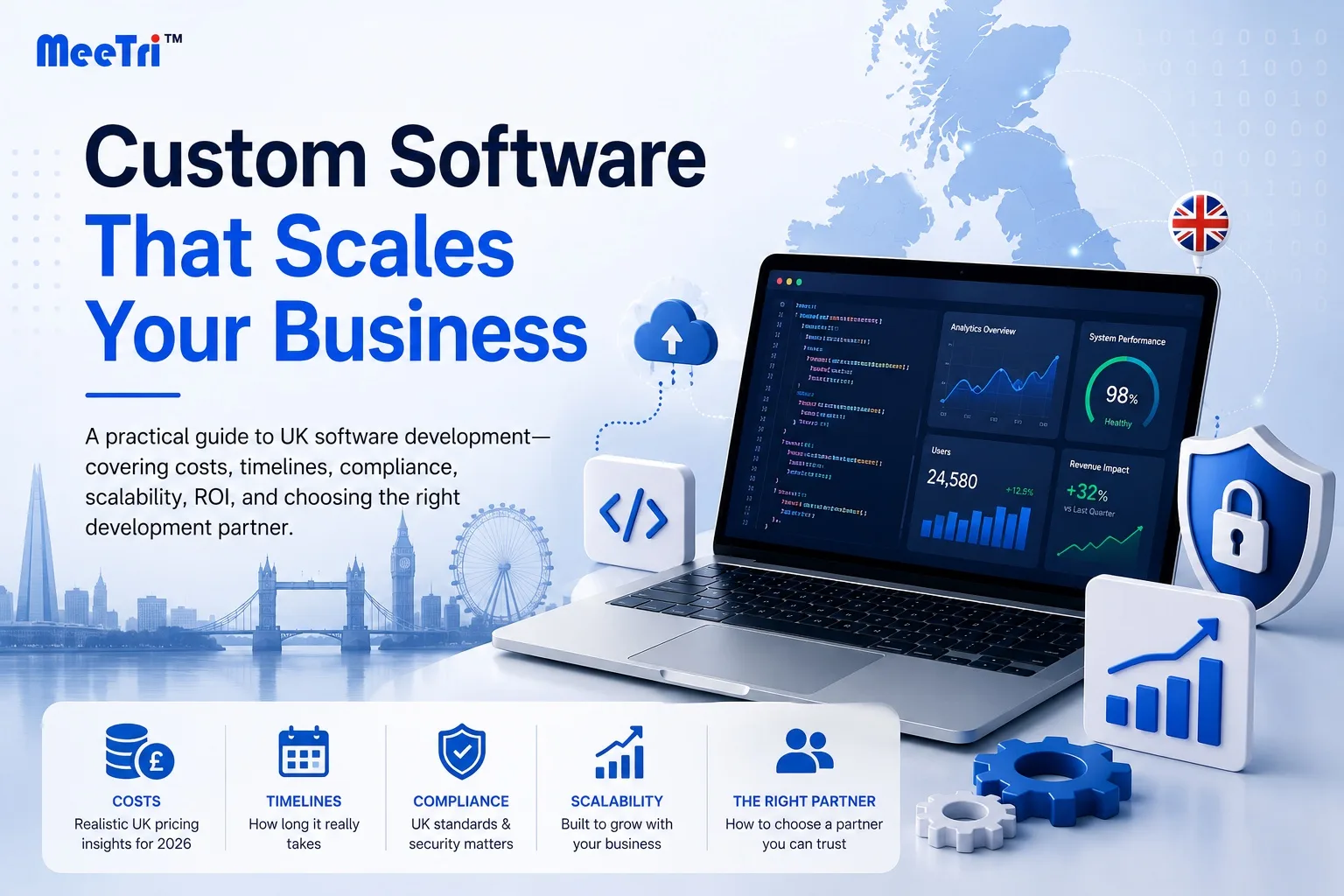
Custom software development is the process of designing, building, and maintaining software built specifically around your business, rather than reshaping your operations to fit a product someone else built for a completely different company. For UK businesses in 2026, this decision carries real weight. The UK digital transformation market is on track to reach an estimated $70.86 billion this year alone, according to Mordor Intelligence, and a growing share of that spend is going toward platforms built to fit exactly one company's workflows, not a generic template.
This guide is written for the people who actually make this call: IT Directors, Heads of Digital, Operations Leaders, and founders weighing up whether to build custom or buy off the shelf. It covers what custom software genuinely costs in the UK right now, how long it realistically takes, what compliance actually demands, and how to choose a partner you will not regret six months in.
What Is Custom Software Development, and Why Do UK Businesses Choose It?

Custom software development covers the full journey from scoping and design through build, testing, deployment, and ongoing support, all shaped around your specific processes, your data, and your customers, not a template built for the widest possible market.
UK businesses turn to custom builds when packaged software cannot keep pace with how the business actually operates. That tends to happen in three situations: when integration needs run deeper than a standard API can handle, when a workflow is genuinely unique to how the company competes, and when the software itself needs to become part of the competitive advantage rather than something every competitor can also buy off the shelf.
In practice, the most common 2026 use cases are internal operations tools, customer facing platforms, workflow automation, data and analytics systems, and legacy modernization, particularly among manufacturers and financial services firms still running on infrastructure built a decade or more ago.
The fastest way to get clarity is a scoping conversation with a software development company that has genuinely delivered at your scale before. A good one will tell you within an hour which parts of your requirements are truly custom and which could be solved faster, and more cheaply, with a tool that already exists.
Custom Software vs Off the Shelf: Where Does the Trade Off Actually Sit?
The real question is rarely build or buy in the abstract. It is: at what point does off the shelf stop serving us?
Off the shelf software earns its place when your workflow is standard across your industry, when speed of deployment matters more than precision, and when the vendor's data model is close enough to yours that you are not constantly working around it.
It breaks down once you need integrations that reach deep into a fragmented tech stack, once your data model no longer matches the vendor's assumptions, or once you are scaling past what the tool was designed to handle. A simple way to sort this:
- Processes common across your sector: look at SaaS first.
- Processes unique to how your business competes: custom is worth a serious look.
- Processes that create real competitive advantage: custom is usually the right call.
- Processes where off the shelf forces workarounds or re keying data: custom often pays back faster than it looks on paper.
The conversation should never start with "custom is expensive." It should start with what the workaround you are currently running is costing you every month.
How Much Does Custom Software Development Cost in the UK in 2026?

There is no single number here, and any provider quoting one before scoping your requirements is worth being cautious about.
That said, here is a realistic 2026 picture for the UK. According to ITJobsWatch data, the median UK software developer day rate sits at around £510, with senior engineers commanding closer to £625 to £700. Junior developers typically charge £300 to £450 per day, mid level developers £450 to £600, and specialist architects or AI engineers £700 to £1,000 or more. London rates run 10 to 40% above the national average, though remote hiring is steadily narrowing that gap.
| Project type | Typical UK cost (2026) |
|---|---|
| Simple internal tool | £10,000 to £30,000 |
| Business web app or platform | £30,000 to £150,000 |
| Cross platform mobile app | £25,000 to £75,000 |
| Native iOS and Android app | £50,000 to £125,000 |
| Enterprise grade system | £250,000 to £500,000+ |
Cost drivers include the complexity of your business logic, the number of integrations you need, your compliance requirements, and whether you are building with a fully UK based team or a hybrid model. Enterprise software UK builds sit at the top of that range for good reason, since they usually carry architecture decisions around cloud deployment and long term maintainability that a smaller project never has to face.
This is where custom software development services differ most from a simple website build. The work does not stop at launch. It includes ongoing support, security patching, and documentation that lets a second developer pick up the codebase years later without starting from scratch.
Software outsourcing UK wide has grown into a core delivery model rather than a fallback option. The UK IT outsourcing market is estimated at $43.16 billion in 2026, according to Market Data Forecast, driven largely by the country's ongoing tech talent shortage, where ManpowerGroup's 2026 research found 73% of employers still struggling to fill skilled roles. Offshore software development remains one of the more effective ways to manage this gap without giving up quality, provided the partner has a structured process and genuine experience at your scale.
One cost most businesses under-claim: a build involving real technical uncertainty may qualify for R&D tax relief, worth raising with your accountant before the project starts.
How Long Does Custom Software Development Take?
Timeline depends on scope, but here is a workable UK benchmark for 2026:
- Discovery and architecture planning: 4 to 8 weeks
- MVP or Phase 1 delivery: 3 to 6 months
- Full enterprise scale build: 6 to 18 months, depending on complexity
Agile development has reshaped how these timelines actually play out. Most UK projects now run in two week agile sprints, with working software reviewed at the end of each one, so you are looking at real output within weeks rather than waiting a year for a single reveal at the end.
The risk with long builds is rarely the development itself. It is scope creep, unclear ownership on your side, and slow sign off cycles. Businesses that name one internal product owner and commit to attending every sprint review consistently ship faster, with far fewer expensive surprises near the end.
How Custom Software Helps UK Businesses Scale and Automate
The scalability advantage of bespoke software is architectural, not incidental. When software is built around your actual data model and workflow logic, it grows with the business instead of boxing it in. UK teams building for scale in 2026 typically prioritise software architecture that handles rising transaction volumes without slowing down, cloud integration with existing ERP and CRM systems to remove manual data transfer, business automation that cuts processing time and error rates, and role based access that scales across large user bases without extra admin overhead.
The clearest ROI case is usually automation. If a manual process costs your team 15 hours a week and custom automation removes 80% of that, the math writes itself. Harder to quantify, but just as real, is the compounding value of cleaner data and faster decisions.
What Compliance and Security Requirements Should UK Software Meet?
For UK businesses, compliance is not a feature you bolt on later. It is table stakes, and the regulator is not shy about proving it.
Data protection sits at the center of this. Under UK GDPR compliance and the Data Protection Act 2018, organizations face fines of up to £17.5 million or 4% of global turnover, whichever is higher. That is not theoretical. In October 2025, the Information Commissioner's Office fined Capita £14 million after a cybersecurity failure exposed the personal data of 6.6 million people, down from an initial proposed figure of £45 million. The Data (Use and Access) Act 2025, in force since February 2026, raised several other penalty caps to match.
Sector specific requirements add another layer. Healthcare software touching NHS integration needs to meet NHS Digital's data security standards, FinTech stack builds need to satisfy FCA requirements alongside PCI DSS, and any business relying on contractors should get IR35 regulation status formally assessed before work starts, since getting that wrong creates tax exposure that has nothing to do with the software itself.
A team worth hiring will ask about your compliance environment during discovery, before a single architecture decision gets made. If they do not ask early, that tells you something about how they approach risk.
How to Choose the Right Custom Software Development Partner in the UK
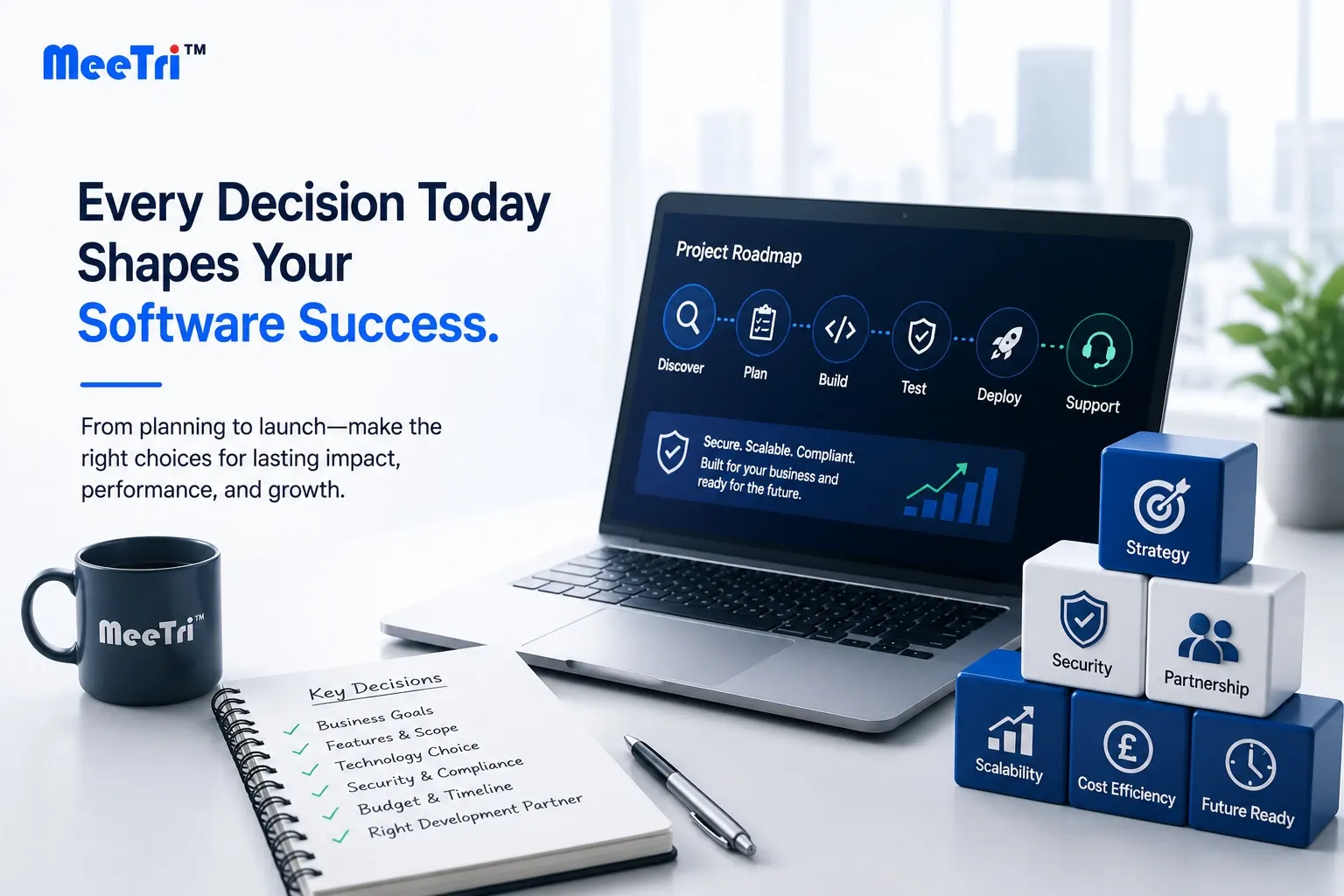
This is where most software buying decisions in the UK actually go wrong, and the criteria that matter in 2026 are not quite the same as five years ago. Worth evaluating: relevant experience at your sector and scale, backed by real examples rather than a polished case study; clear architecture judgment on cloud integration and tech stack rather than a default answer; process transparency on sprints and scope changes; a defined day to day contact; and a clear post launch support plan.
Among UK software development companies, the ones worth shortlisting will push back on requirements that do not serve your goals and flag risks before you have to ask, whether you are hiring for an enterprise build or evaluating an app development agency UK wide for a mobile first product.
Ask to see a live app or system they built for a client your size, not just screenshots from a portfolio page. The right software development partner will feel less like a vendor and more like an extension of your own team from the first discovery call onward.
What Is the ROI of Custom Software Development?
ROI from custom software rarely shows up in one line on a P&L. Direct returns come from reduced licensing costs, faster processing, and fewer errors reaching customers. Indirect returns include competitive differentiation, faster time to market, and better data quality feeding better decisions. There is also a longer term return worth remembering: you own what you build. No vendor can raise your price overnight or force a migration on their timeline instead of yours.
Businesses that treat custom software as a capital investment, not a one off project cost, tend to see materially better outcomes, largely because they build with maintainability in mind from day one. For most UK enterprise builds, ROI turns clearly positive within 18 to 36 months. Automation heavy projects often get there faster.
Conclusion
Custom software development in the UK is no longer a niche choice reserved for large tech firms. It is a mainstream capability for any business serious about efficiency, scale, and holding onto its edge.
The process looks the same regardless of sector: work out where off the shelf stops serving you, get clear on scope and budget before you talk to anyone, judge partners on honesty and process rather than portfolio alone, and build security and compliance from day one rather than retrofitting them later.
A scoping conversation costs nothing and usually clarifies more than a week of internal debate.
Frequently Asked Questions
It is the process of designing, building, and maintaining software created specifically for your business, rather than adapting your operations to fit a product built for a broad market. It covers everything from initial scoping through ongoing support after launch, shaped entirely around your workflows and your customers.
UK costs typically range from around £10,000 for a simple internal tool to £500,000 or more for a complex enterprise system, with most business applications landing between £30,000 and £150,000. The main drivers are business logic complexity, integration count, and compliance needs.
Businesses invest in custom software when off the shelf tools create workarounds, data gaps, or growth ceilings that packaged software was never designed to solve, and when the software itself needs to become part of a genuine competitive advantage.
Discovery and planning typically take 4 to 8 weeks, a first working phase ships in 3 to 6 months, and a full enterprise build generally runs 6 to 18 months depending on complexity, with working software delivered every two weeks throughout.
Look for relevant sector experience, clear architecture judgment, a transparent process, and a defined day to day contact. Ask to see live examples of past work at your scale, and notice whether they ask about compliance during the first conversation rather than after the contract is signed.
Bespoke software development UK wide gives businesses software that scales with actual usage instead of forcing workarounds, removes the licensing costs of shared platforms, and creates a system the business fully owns rather than rents.
Neither is universally better. Off the shelf wins when your workflow is standard across the industry and speed matters more than precision. Custom wins once integration needs run deep, your processes are genuinely unique, or the software needs to become part of your competitive advantage.

Related Articles

Custom Software Development Cost in 2026
Explore the cost drivers, hidden expenses, and planning considerations behind custom software budgets.

How to Choose the Right Software Development Partner in the UK
See how businesses evaluate process quality, architecture judgment, and delivery transparency before signing a partner.
Hiring Software Developers in the UK
Understand what it takes to hire well in a market where senior talent remains tight and delivery expectations are high.
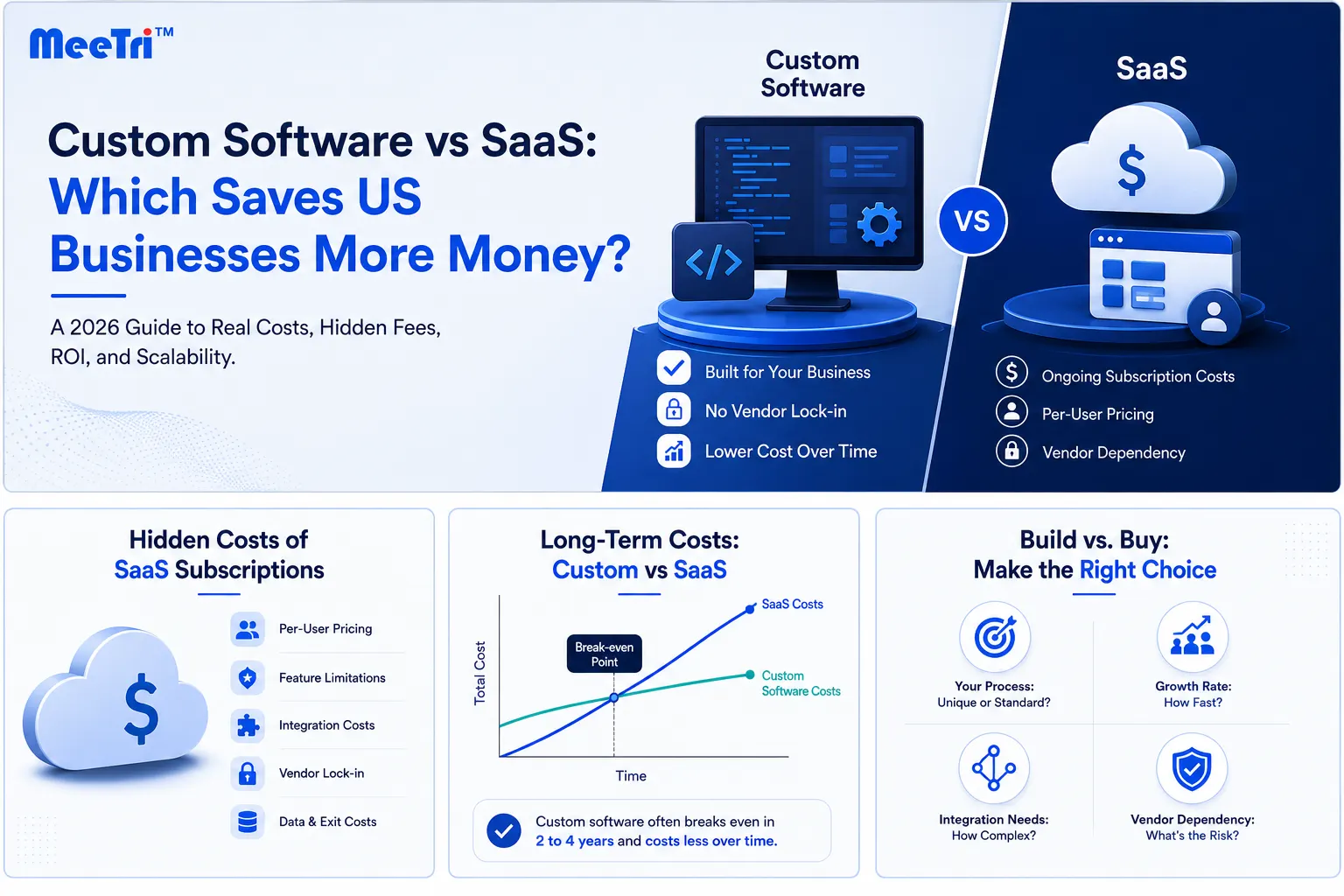
Custom Software vs SaaS: Which Saves UK Businesses More Money?
Compare custom software and SaaS costs, hidden fees, ROI, scalability, and when each option makes financial sense.