Get a Free Development Strategy Consultation
Tell us about your project — we'll respond within 24 hours with tailored recommendations.
What Does Custom Software Development in the UAE Actually Mean?

Put simply, custom software development UAE is the process of building software tailored to your business, not the other way round. In practice, this covers everything from a single automated workflow to a full platform, and it typically breaks down into:
- Custom internal tools and operational dashboards.
- Client-facing platforms, portals and booking systems.
- enterprise software UAE systems that connect multiple departments.
- Mobile and web applications built for a specific audience.
The common thread is fit. The software adapts to your business, not the other way round.
Why More Dubai and Abu Dhabi Businesses Are Choosing Bespoke Software
The shift toward bespoke software Dubai development isn't a trend, it's a response to how fast the region is growing. Across the Gulf, long-term digital economy strategies, referenced alongside plans like Saudi Arabia's Vision 2030 and the UAE's own national digital agenda, are pushing industries from logistics to fintech to healthcare to digitise faster than off-the-shelf platforms can keep up with.
Businesses running software development Abu Dhabi projects are choosing custom builds for a few practical reasons:
- Generic software rarely fits regulated or fast-moving industries.
- Licensing costs for packaged tools add up as teams scale.
- Local compliance and Arabic-first user needs are hard to retrofit later.
- Integration with existing systems is often an afterthought in off-the-shelf tools.
Businesses that make the switch early often avoid the costly mid-growth software replacement most off-the-shelf users eventually face.
Custom Software vs Off-the-Shelf: Which One Fits Your Business?
Not every business needs custom software, and that's worth saying upfront. Off-the-shelf tools make sense when your processes are fairly standard and speed matters more than fit.
Custom software makes more sense when:
- Your workflows are unique to your industry or business model.
- You need deep integration with existing systems.
- Off-the-shelf tools are forcing your team to work around limitations.
- You're scaling fast and need software that scales with you.
Most growing businesses eventually outgrow generic tools, that's the honest answer.
Enterprise Software and App Development for UAE Businesses
enterprise software UAE budgets usually go toward two different things: systems that run the business internally, and apps that reach customers or field teams directly. Splitting the two makes it far easier to scope a Custom Software Development Services project properly from the start.
On the enterprise side, that typically means:
- Finance, HR, inventory and workflow management systems.
- API integrations connecting CRMs, ERPs and payment systems.
- AI-powered tools for automation and reporting.
On the app side, it usually means:
- app development Dubai businesses need for iOS, Android or both.
- Cross-platform apps built once and deployed across devices.
- Field, delivery or service apps tied directly into backend systems.
Most businesses don't need everything at once. A good partner helps you sequence what matters first, so you're not paying for complexity you don't need yet.
Data Protection, Compliance and Cloud Strategy Every UAE Business Should Know
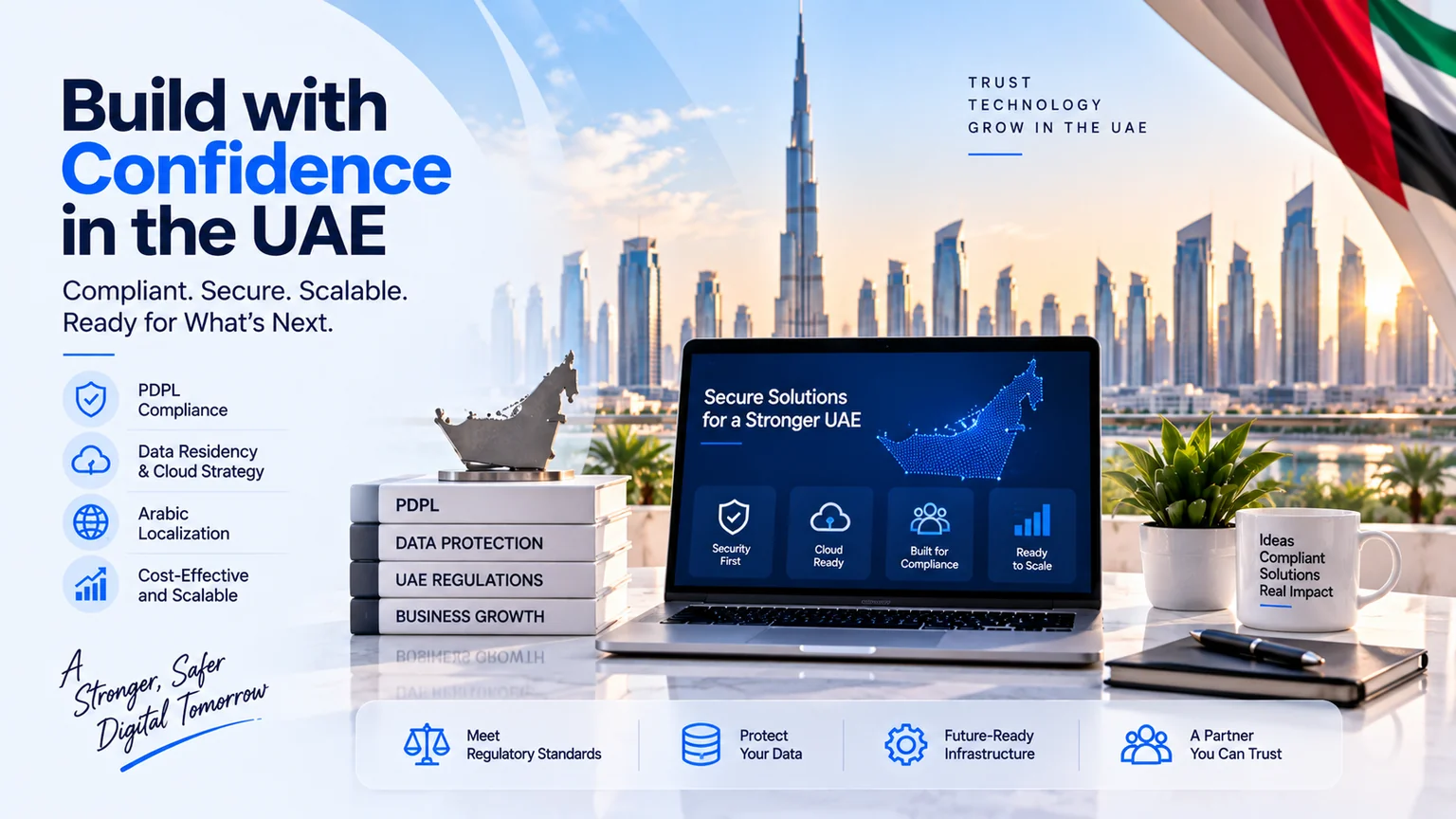
This is the part many businesses overlook, and it's often the difference between software that passes an audit and software that becomes a liability.
Any custom system handling UAE customer data needs to be built with the PDPL Regulation in mind, alongside sector-specific rules if you're operating within a DIFC Framework or another Free Zone jurisdiction. Data Residency requirements can also determine where your servers and backups are legally allowed to sit, which shapes your entire Cloud Strategy from day one.
If you're serving a local audience, Arabic Localization isn't a nice-to-have either. Right-to-left interface support, accurate translation and culturally appropriate UX all affect adoption, not just how the app looks.
A partner who understands these requirements upfront saves you a painful, expensive rebuild later.
Get In Touch With Us to walk through your compliance needs before you start writing requirements.
Get In Touch
How Much Does Custom Software Development Cost in the UAE?
There's no single number here, and anyone who quotes one without asking questions first probably hasn't scoped your project properly. Cost depends on:
- Project complexity and number of integrations.
- Whether you need web, mobile or both.
- Compliance and security requirements.
- Delivery model, in-house, local agency or Offshore Software Development.
- Ongoing maintenance and support needs.
Many UAE businesses are choosing offshore and hybrid delivery models because they reduce cost without reducing quality, especially when the partner already understands cross-border compliance and time zone coordination. Ask for a detailed breakdown before you commit to anything.
How to Choose the Right Software Agency or Development Partner
Picking a software agency UAE businesses can actually rely on comes down to a few honest questions, not a sales pitch.
Before you sign anything, ask:
- Have they built something similar before, and can they show it?
- Do they understand PDPL and Free Zone compliance requirements?
- What does their communication and reporting process look like?
- Are pricing and timelines documented clearly, with no vague estimates?
- What happens after launch, is support built in or billed separately?
It also helps to check for independent quality markers, such as ISO 9001 or ISO 27001 certification, and a track record across regulated industries like healthcare or fintech. For reference, that's the bar we hold ourselves to at Meetri Infotech: ISO 9001:2015 and ISO 27001:2013 certified, with 200+ projects delivered over 16+ years. Whichever Software Development Partner you shortlist, the right one won't just build what you ask for, they'll ask questions to understand what you actually need first.
Final Thoughts
Custom software isn't about chasing the latest technology trend. It's about building something that fits how your business runs today, and can flex as it grows. If you're comparing options, start with a conversation, not a contract.
Get In Touch With Us and talk to Meetri Infotech about what you're trying to build. You'll get a straight answer on what's realistic.
Frequently Asked Questions
Costs vary based on complexity, integrations and compliance needs. Simple internal tools cost far less than enterprise-grade platforms. A proper quote should come from a scoping conversation, not a generic price list.
Most projects run from a few weeks for a simple tool to several months for a full enterprise platform, depending on scope and how quickly requirements are finalised.
Choose custom when your workflows are unique or off-the-shelf tools force awkward workarounds. If your needs are fairly standard, off-the-shelf may still be the faster, cheaper option.
Yes. A well-built system connects with your existing ERP, CRM, accounting and other tools through APIs, so data flows automatically instead of being entered twice.
Security and compliance need to be built in at the design stage, not added afterwards. This means aligning with PDPL requirements, encrypting data, controlling access, and confirming where data is stored.
Yes, if it's architected correctly from the start. Software built on scalable cloud infrastructure can handle more users and features as your business grows, without a full rebuild.
Look at their portfolio, ask for references, and check whether they understand regional compliance. A transparent process and honest timelines matter more than confident sales promises.

Related Articles
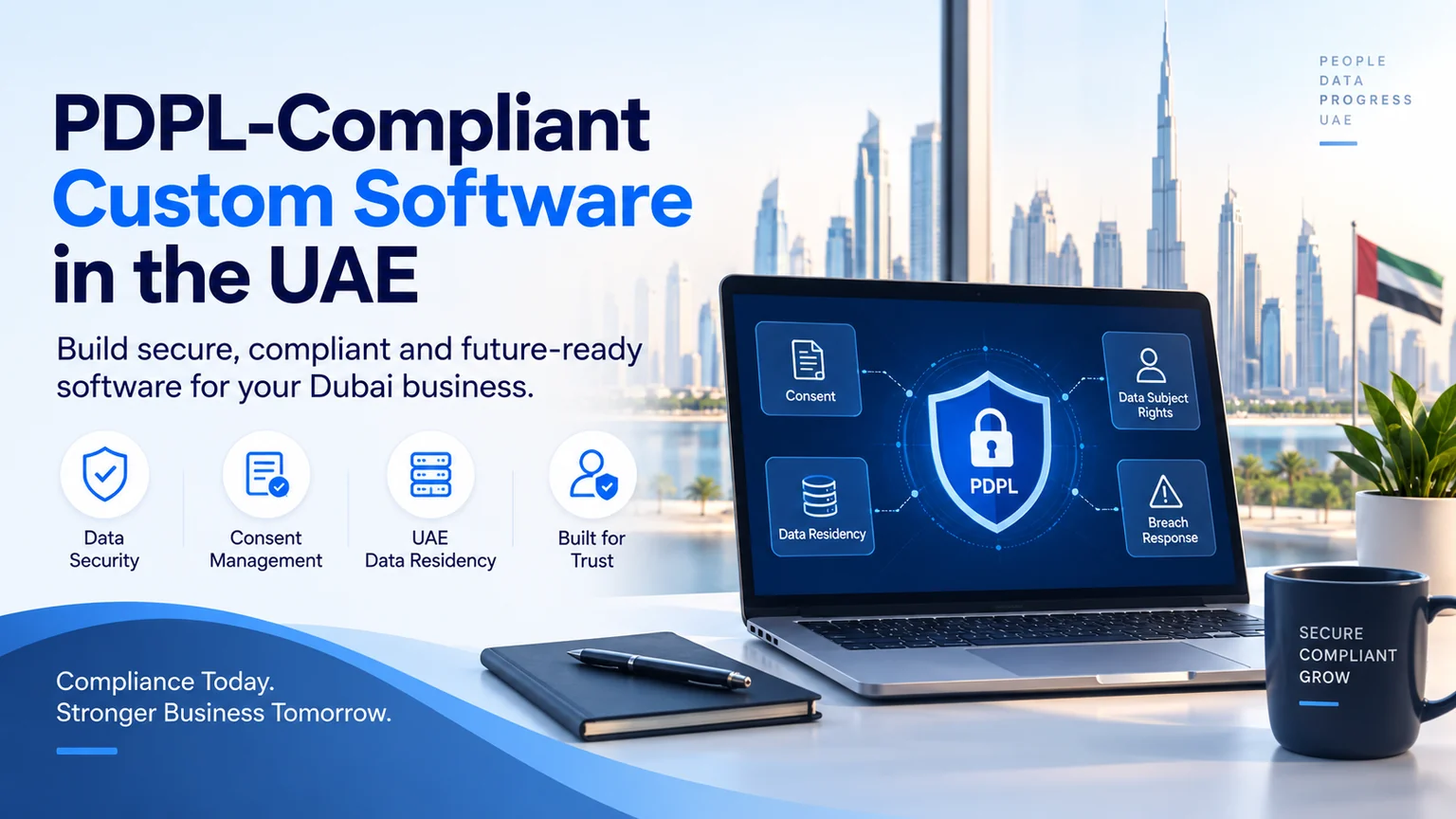
PDPL-Compliant Custom Software in the UAE
Learn how consent, data residency, breach response and vendor selection shape compliant builds.
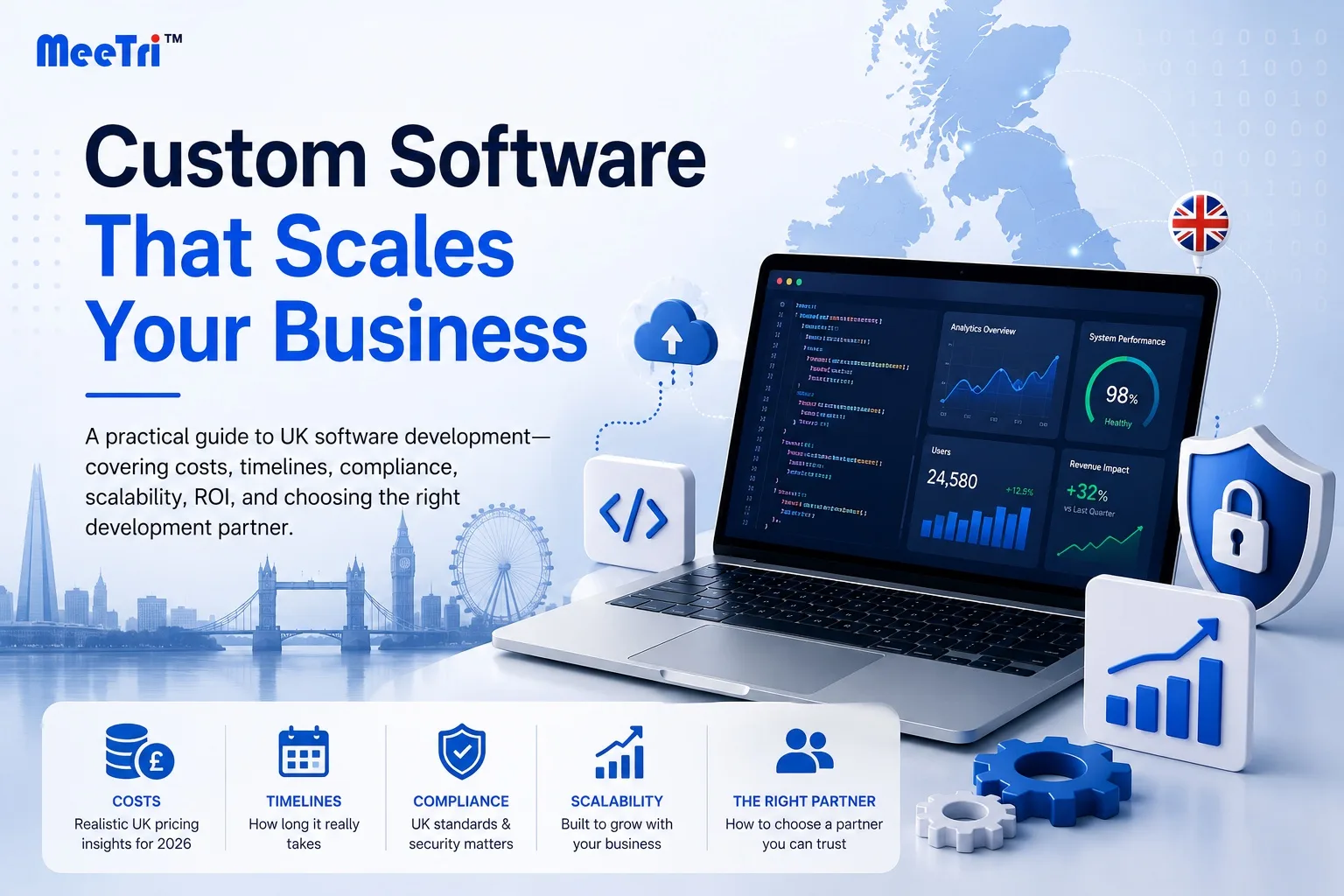
Custom Software Development UK: The 2026 Business Guide
Explore planning, cost, compliance, and partner considerations for a custom software build.

Offshore Software Development: Maximise ROI & Quality
Explore offshore development benefits, challenges, and best practices for cost-effective delivery.
How to Choose the Right Software Development Partner
Learn which questions reveal a partner's process and technical judgment.