Get a Free Development Strategy Consultation
Tell us about your project — we'll respond within 24 hours with tailored recommendations.
How to Choose a Healthcare Cloud Migration Partner in UAE for Your Facility
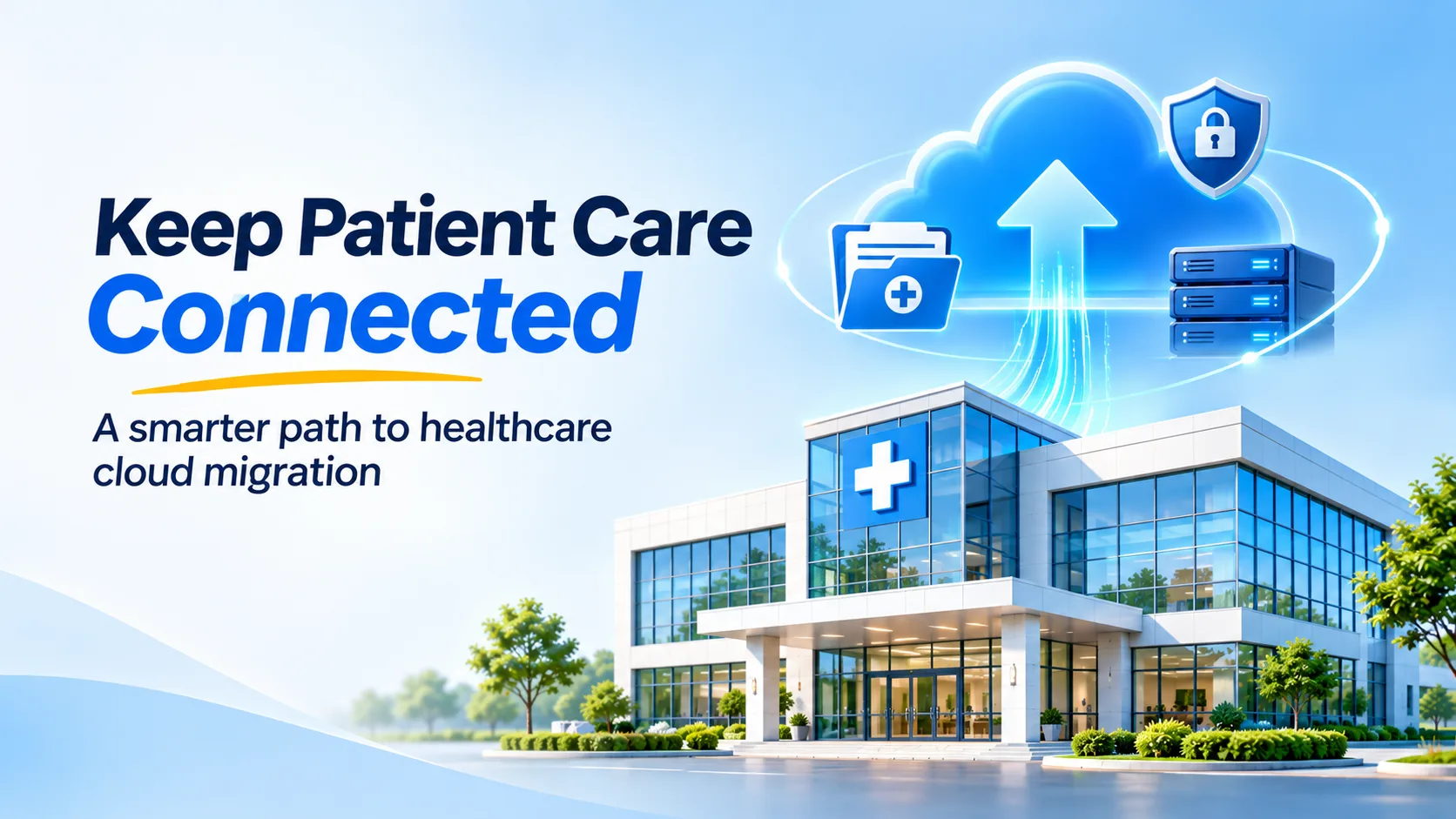
Healthcare facilities depend on dozens of connected systems to manage patient records, clinical workflows, appointments, diagnostics and day-to-day operations. But when these systems run on outdated infrastructure, even routine tasks can become difficult. Slow applications, disconnected databases and growing security concerns can affect both operational efficiency and patient experience.
Moving to the cloud can address many of these challenges, but healthcare cloud migration isn't simply about transferring files from physical servers to an online environment. It involves protecting sensitive medical information, maintaining system integrations, meeting regulatory requirements and ensuring clinical teams can continue working without unnecessary disruption.
This is why choosing the right Software Development Company matters. Your technology partner should understand healthcare workflows, data security, legacy system modernisation and the technical requirements of a reliable cloud environment.
If your facility is considering Healthcare Cloud Migration UAE, this guide explains what to evaluate, which questions to ask and how to identify a technology partner capable of supporting your long-term digital infrastructure.
Quick Answer: How Do You Choose the Right Healthcare Cloud Migration Partner in UAE?
Choose a healthcare cloud migration partner based on its understanding of healthcare systems, experience with medical data migration, cloud architecture capabilities, security practices, regulatory awareness and post-migration support.
A reliable partner should provide a structured migration plan covering infrastructure assessment, data mapping, application compatibility, integration testing, backup and recovery, deployment and ongoing maintenance.
Most importantly, the partner must understand that healthcare systems support essential clinical operations. Protecting patient information and maintaining access to critical applications should remain priorities throughout the migration.
What Is Healthcare Cloud Migration?
Healthcare cloud migration is the process of moving healthcare applications, databases, digital records and IT workloads from traditional on-premises infrastructure or existing hosting environments to a cloud-based infrastructure.
The process may involve transferring:
- Electronic Health Records (EHR) and Electronic Medical Records (EMR).
- Patient management and appointment scheduling systems.
- Laboratory Information Management Systems (LIMS).
- Medical imaging and diagnostic applications.
- Billing, insurance and pharmacy management platforms.
- Telemedicine and patient portal applications.
- Clinical databases and reporting systems.
However, not every healthcare application should be migrated in the same way. Some systems may be suitable for direct migration, while others require architectural changes, integration improvements or redevelopment.
A well-planned migration considers application dependencies, data sensitivity, system performance and operational requirements before deciding which workloads should move.
Why Choosing the Right Healthcare Cloud Migration Partner Matters
Healthcare infrastructure is different from conventional business IT environments. A hospital cannot simply switch off its existing systems for several days while a migration takes place.
Doctors need access to patient histories, administrative teams require accurate records, and diagnostic departments depend on connected applications. Even a short interruption can affect important workflows.
The right Healthcare Cloud Migration Services UAE provider should understand these operational requirements before recommending a migration approach.
Here are some reasons why partner selection matters:
- Patient data protection: Medical records contain confidential information. The migration process must maintain data confidentiality, integrity and controlled access.
- Clinical continuity: Existing healthcare applications should remain available throughout the transition, with carefully planned cutover and rollback procedures.
- System interoperability: EHR, EMR, laboratory, pharmacy and billing applications need to exchange information reliably.
- Infrastructure scalability: Healthcare organisations need technology that can accommodate increasing patient volumes, additional facilities and growing data requirements.
- Long-term reliability: Migration doesn't end at deployment. Infrastructure monitoring, security updates, performance management and technical support remain essential.
8 Factors to Consider When Choosing a Healthcare Cloud Migration Company UAE
Selecting a technology partner requires more than comparing proposals or looking at the number of cloud engineers available. Evaluate the following eight areas before making a decision.
1. Experience with Healthcare Software and Clinical Systems
Start by understanding whether the partner has experience working with healthcare applications and their technical requirements.
A general cloud migration provider might understand server configuration and database transfers but lack experience with clinical workflows or healthcare application dependencies.
Look for technical capabilities involving:
- EHR and EMR systems.
- Hospital management software.
- Patient management applications.
- Laboratory and diagnostic systems.
- Telemedicine platforms.
- Healthcare APIs and third-party integrations.
Ask how the team handles complex application dependencies and what testing procedures it follows before migrating clinical workloads.
A partner with healthcare software engineering knowledge can better understand the relationship between infrastructure, applications and everyday medical operations.
2. Strong Medical Data Migration Capabilities
Medical Data Cloud Migration requires careful planning because healthcare databases often contain years of clinical and administrative information.
Moving data without proper validation can result in incomplete patient histories, duplicated records, missing attachments or incorrect data relationships.
Your technology partner should have a documented approach to:
- Assessing existing databases and data structures.
- Identifying duplicate, incomplete and inconsistent records.
- Mapping data fields between old and new systems.
- Maintaining patient identifiers and record relationships.
- Validating migrated information.
- Creating backups before migration.
- Maintaining audit trails during data transfer.
Ask how the team will verify data accuracy after migration.
Successful migration isn't measured by how much data reaches the destination. It's measured by whether the information remains complete, accurate, accessible and usable.
3. Understanding of Healthcare Data Security and Compliance
Security should be one of the first evaluation criteria, not something discussed after the migration proposal has been approved.
Healthcare facilities must consider applicable UAE healthcare regulations, data protection obligations and the requirements of their relevant health authority.
A capable partner should understand:
- Encryption of data during transfer and storage.
- Role-based access control.
- Identity and authentication management.
- Security monitoring and audit logs.
- Backup protection and disaster recovery.
- Vulnerability assessment and incident response.
- Data residency and cross-border processing restrictions.
Ask where production data, backups, logs and disaster recovery copies will be stored and processed.
Also, request details of the provider's security controls, independent audit evidence and contractual responsibilities.
Do not assume that a cloud platform's international certifications automatically establish compliance for your specific healthcare facility.
4. Expertise in Cloud Infrastructure and Architecture
A suitable Healthcare Cloud Infrastructure should support the applications, data volumes and operational demands of your facility.
Your partner should conduct a Cloud infrastructure assessment before recommending the architecture.
This assessment should cover:
- Existing server and database capacity.
- Application dependencies.
- Network performance and connectivity.
- Storage requirements.
- Workload availability requirements.
- Security architecture.
- Backup and disaster recovery needs.
- Expected future growth.
The partner should also explain whether a public cloud, private cloud or hybrid architecture is appropriate.
A hybrid approach may be useful when certain workloads need to remain within existing environments while other applications move to cloud infrastructure.
The objective is to select an architecture based on operational requirements, security and scalability, rather than following a particular technology trend.
5. Ability to Integrate Existing Healthcare Applications
Healthcare facilities rarely operate using a single software application.
Their systems may include EHR platforms, laboratory software, pharmacy applications, billing systems and patient engagement tools.
During migration, these systems must continue exchanging information correctly.
Ask whether the partner can handle API development, interface modernisation and integration testing.
Where applicable, evaluate its understanding of healthcare interoperability standards such as HL7 and FHIR.
For example, when a patient record is updated, the relevant information should remain accessible to authorised applications without creating duplicate or inconsistent records.
A migration partner should test these connections before production deployment, not discover integration failures after the new infrastructure goes live.
6. A Clear Migration Strategy with Minimal Downtime
A healthcare migration project needs a defined implementation roadmap.
Your partner should explain how it will migrate systems while reducing disruption to clinical and administrative activities.
A structured approach generally includes:
- Infrastructure discovery and assessment.
- Application and database dependency mapping.
- Migration prioritisation.
- Data backup and preparation.
- Pilot migration and validation.
- Controlled production migration.
- Post-migration testing and monitoring.
Ask whether the provider has a rollback strategy if a critical application fails during deployment.
It should also establish recovery objectives, including Recovery Time Objective (RTO) and Recovery Point Objective (RPO), according to the facility's operational requirements.
7. Post-Migration Support and Maintenance
Moving to a cloud environment is only the beginning.
Your healthcare systems still need monitoring, security updates, performance optimisation and technical maintenance.
Before signing an agreement, clarify what support is included after deployment.
Consider:
- Infrastructure and application monitoring.
- Security patch management.
- Database maintenance.
- Performance optimisation.
- Backup verification.
- Disaster recovery testing.
- Incident management.
- Technical support and escalation procedures.
Also, understand the provider's service-level agreements, support availability and responsibilities during critical incidents.
A long-term technology relationship should support continuous improvement rather than end when the migration project is completed.
8. Transparent Project Management and Technical Accountability
Cloud migration involves multiple stakeholders, including IT teams, clinical departments, administrators, security specialists and external technology providers.
Without clear communication, even technically sound projects can experience delays and misunderstandings.
Evaluate whether the partner provides:
- Documented project scope and responsibilities.
- Clear migration milestones.
- Regular progress reporting.
- Risk and dependency registers.
- Technical documentation.
- Defined acceptance criteria.
- Knowledge transfer for internal teams.
A reliable partner should explain technical decisions in language that business and healthcare stakeholders can understand.
UAE Healthcare Data Security and Compliance Requirements
Healthcare cloud migration in the UAE requires particular attention to data protection and regulatory obligations.
Federal Law No. 2 of 2019 concerning the use of Information and Communication Technology in Health Fields establishes important requirements for the handling and protection of healthcare information.
Healthcare facilities should also consider applicable implementing decisions, local health authority requirements and relevant data protection legislation.
For example, Dubai Health Authority publishes policies and regulations covering healthcare information security, health data management and electronic medical record transitions.
Before migration, your organisation should assess:
- Data residency: Identify where patient information will be stored, processed, backed up and accessed. Applicable restrictions on transferring healthcare data outside the UAE must be considered.
- Access management: Ensure that only authorised individuals can access sensitive clinical and administrative information.
- Data integrity: Establish validation procedures to confirm that patient records remain accurate and complete throughout the migration.
- Auditability: Maintain appropriate records of data access, changes, migration activities and security incidents.
- Third-party responsibilities: Document the responsibilities of cloud providers, software developers and other vendors handling healthcare information.
Importantly, compliance depends on the facility's specific circumstances, applicable regulations and approved arrangements. A technology partner can support implementation, but the healthcare organisation remains responsible for obtaining appropriate legal and regulatory guidance.
Healthcare Cloud Migration Process: What Should You Expect?
A reliable Healthcare Data Migration Services engagement should follow a structured process rather than transferring everything at once.
Here is what a typical migration journey looks like.
Step 1: Infrastructure Assessment and Discovery
The project begins with an assessment of existing infrastructure, applications, databases and network dependencies.
The team identifies outdated components, performance limitations, security risks and systems that may require modernisation.
Step 2: Migration Planning and Cloud Architecture Design
Based on the assessment, the team defines the target architecture, migration priorities, security controls and implementation timeline.
The plan should also establish data residency requirements, backup arrangements and recovery objectives.
Step 3: Data Preparation and Application Modernisation
Before migration, databases are reviewed, data structures are mapped and application dependencies are documented.
Where necessary, legacy applications may require updates to support the new environment.
Step 4: Secure Migration and Integration
Applications, databases and approved workloads are transferred using controlled migration procedures.
The team validates data accuracy and tests connections between healthcare applications.
Step 5: Testing and Deployment
The migrated environment undergoes functional, security, performance and integration testing.
Only after agreed acceptance criteria are met should the production cutover proceed.
Step 6: Monitoring and Continuous Optimisation
Following deployment, the environment is monitored for performance issues, security concerns and unexpected application behaviour.
Ongoing improvements help maintain system reliability as the healthcare organisation grows.
Common Healthcare Cloud Migration Challenges and How to Address Them
Even well-planned migration projects can encounter technical and operational challenges.
| Common challenge | Recommended approach |
|---|---|
| Legacy application compatibility | Assess dependencies and modernise applications where required. |
| Patient data inconsistency | Use structured data mapping and post-migration validation. |
| Security vulnerabilities | Implement encryption, access controls and security testing. |
| Clinical downtime | Use phased migration, planned cutovers and rollback procedures. |
| Integration failures | Test APIs and application interoperability before go-live. |
| Unexpected infrastructure costs | Monitor resource usage and review architecture regularly. |
| Staff unfamiliarity | Provide documentation, training and operational support. |
Addressing these challenges early helps healthcare facilities reduce migration risks and establish a more dependable technology environment.
Questions to Ask Before Selecting a Healthcare Cloud Migration Partner
Before finalising a technology partner, ask questions that reveal its actual technical approach.
Have you worked with EHR, EMR and other healthcare applications?
How will you protect patient information during data transfer?
Where will healthcare data and backup copies be stored and processed?
How do you validate data accuracy after migration?
Can you integrate existing clinical systems through APIs and healthcare interoperability standards?
What is your strategy for minimising clinical downtime?
What backup, disaster recovery and rollback arrangements do you provide?
What ongoing maintenance and technical support are included?
Request clear technical explanations and documented evidence rather than relying only on general assurances.
How the Right Technology Partner Supports Long-Term Healthcare Growth
A successful migration should do more than replace outdated servers. It should create a foundation for better healthcare applications, connected workflows and future digital capabilities.
For example, organisations planning Digital Transformation in Healthcare may want to introduce intelligent patient management, remote monitoring, automated administrative workflows and improved reporting.
These improvements often require application-level development alongside infrastructure changes.
A technology partner with healthcare engineering capabilities can help organisations modernise existing systems, build integrations and develop applications that support changing operational needs.
This may include Custom EHR Software Development, secure patient engagement solutions and connected healthcare platforms.
Similarly, working with the right Patient Portal Development Partner can help facilities improve appointment management, patient communication and access to relevant medical information.
When evaluating business outcomes, organisations should also consider Healthcare Automation ROI. This can be measured through reduced manual administrative work, improved workflow efficiency, fewer data entry errors and better utilisation of existing resources.
Meetri Infotech supports healthcare organisations through application development, cloud-based healthcare solutions, software architecture, API integration, quality assurance and ongoing technical support. Its healthcare engineering capabilities can complement infrastructure modernisation initiatives where application changes and integrations are required.
Explore Healthcare Software Development Services
Conclusion: Make Healthcare Cloud Migration a Strategic Decision
Choosing a healthcare cloud migration partner is a decision that affects much more than your IT infrastructure. It influences patient data protection, clinical continuity, application performance and the ability to introduce new digital services.
Before making a decision, assess the partner's healthcare technology experience, data migration methodology, security practices, integration capabilities and long-term support model.
Don't select a provider simply because it promises a quick migration or offers the lowest proposal. Focus on technical accountability, regulatory awareness and a migration strategy that reflects your facility's actual requirements.
The right technology foundation can help healthcare organisations modernise existing systems, improve operational efficiency and prepare for future innovation.
If your organisation is planning healthcare application modernisation, cloud-based development or system integration, explore Custom Software Development Services that align with your operational and technical requirements.
Ready to discuss your healthcare technology requirements?
Discuss Your Healthcare Cloud Migration Requirements
Frequently Asked Questions
Healthcare cloud migration is the process of transferring healthcare applications, patient databases, medical records and IT workloads from on-premises infrastructure or existing hosting environments to cloud-based infrastructure. It helps healthcare organisations improve scalability, accessibility and infrastructure management while maintaining appropriate data security.
Evaluate the partner's healthcare software experience, data migration capabilities, cloud architecture knowledge, security controls, regulatory awareness, integration expertise and post-migration support. Ask for a documented migration strategy and evidence of relevant project experience.
Healthcare cloud migration can be secure when appropriate technical and organisational safeguards are implemented. These include encryption, role-based access controls, identity management, security monitoring, backup protection and data integrity checks. Compliance must also be assessed against applicable healthcare regulations.
Depending on technical compatibility and regulatory requirements, healthcare organisations may migrate EHR and EMR systems, patient management applications, laboratory systems, billing software, telemedicine platforms, patient portals and reporting applications.
The timeline depends on the number of applications, database size, legacy infrastructure, integration requirements and security considerations. A smaller application migration may take weeks, while complex healthcare environments with multiple interconnected systems can require several months. A technical assessment is necessary to establish a realistic schedule.
Common challenges include patient data security, regulatory compliance, legacy application compatibility, data integrity, system integration, clinical downtime and staff readiness. A phased migration strategy, thorough testing and documented recovery procedures help address these risks.
Healthcare data handling is subject to UAE federal legislation and applicable local health authority requirements. Federal Law No. 2 of 2019 establishes restrictions concerning the transfer of health information outside the UAE, subject to applicable exceptions and approvals. Facilities should obtain regulatory guidance before selecting hosting locations or migration arrangements.
Cloud migration primarily involves moving applications, data or workloads to a cloud environment. Healthcare software modernisation involves improving the underlying applications, architecture, integrations and functionality. Some projects require both to achieve long-term scalability and operational efficiency.