Get a Free Development Strategy Consultation
Tell us about your project — we'll respond within 24 hours with tailored recommendations.
What Software Development Costs in the UK Right Now
The UK software development industry is worth £49.5 billion in 2026, spread across more than 29,000 active businesses, according to IBISWorld's most recent industry analysis. That scale is exactly why pricing feels so inconsistent: agencies quoting the same brief can land two or three times apart depending on team location, seniority mix, and how much of the quote is genuinely scoped versus guessed. The rest of this guide breaks that number down by project type, rate, and hidden cost.
UK Software Development Cost by Project Type
Here is how software project pricing UK typically breaks down by the four common tiers, based on a cross section of 2026 UK agency pricing.
| Project Type | Complexity | Cost Range | Typical Timeline |
|---|---|---|---|
| MVP or basic internal tool | Low | £15,000 to £60,000 | 6 to 12 weeks |
| Mid complexity platform (SaaS, marketplace, booking system) | Medium | £45,000 to £150,000 | 3 to 6 months |
| Bespoke enterprise software | High | £150,000 to £300,000 | 6 to 10 months |
| AI powered or ERP scale platform | Very high | £300,000 and above | 10 to 18 months |
An MVP is deliberately narrow, one or two features built to validate an idea, which is why it sits at the bottom of the range. Mid complexity platforms introduce multiple user roles and third party integrations, such as payment gateways or CRM connections, which is where costs and timelines both step up. Bespoke enterprise software is built entirely around your specific processes rather than adapted from a template, so the increase reflects genuine custom architecture, not just more features. AI powered and ERP scale platforms sit at the top of the range because they need specialist machine learning engineers, real time data infrastructure, and extended QA cycles that a standard web build never touches.
It is worth saying plainly: watching quotes for what feels like the same project land £100,000 apart is disorienting, and it is a reasonable reaction to feel stuck before you have even started. The table above exists so you have a real project budget UK benchmark to check any single quote against, rather than taking one agency's number on faith.
Cost Impact of Key Software Features
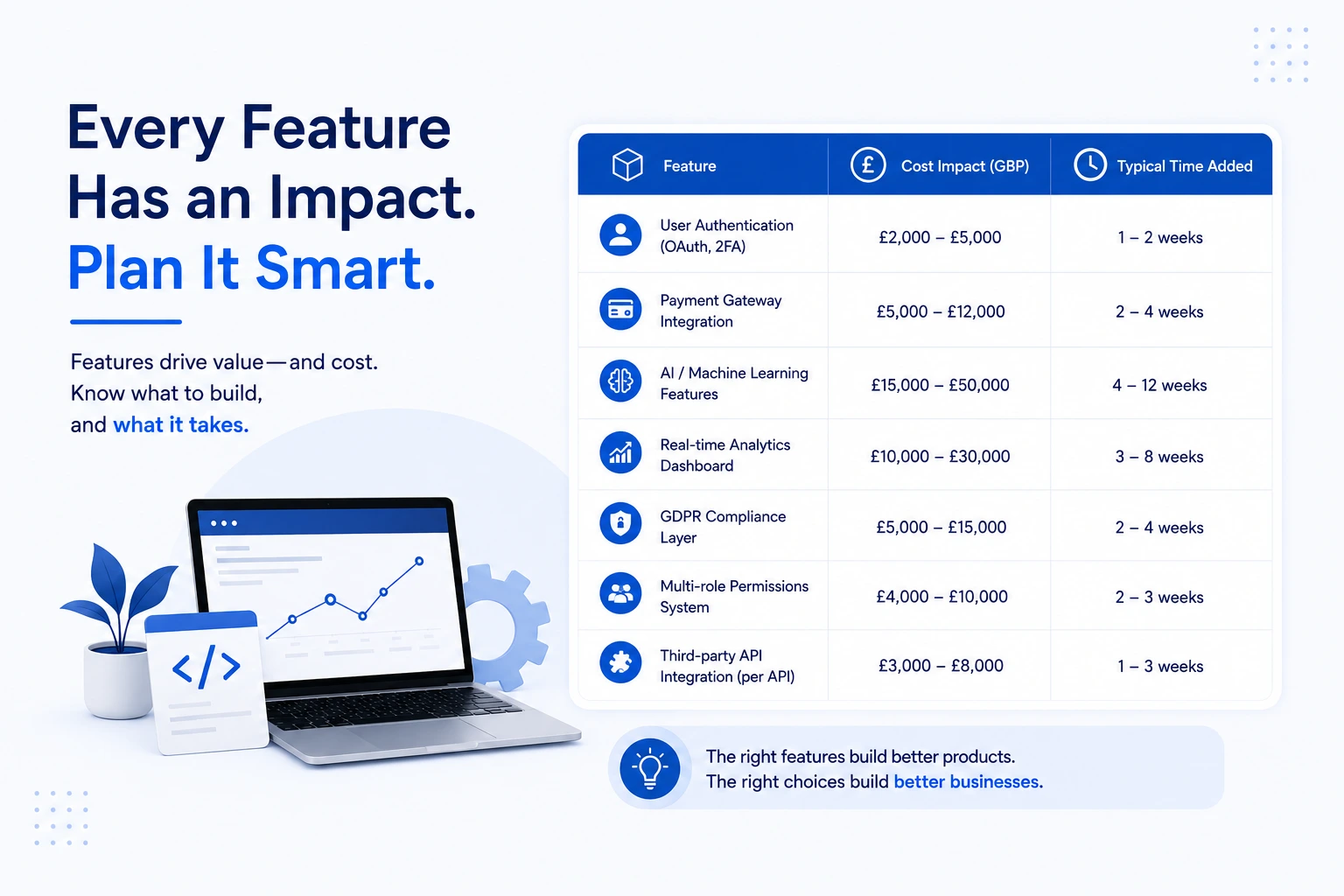
Individual features move your total more than most founders expect when they first scope a build, and each one is worth pricing separately rather than folding into a vague overall estimate.
| Feature | Cost Impact | Typical Time Added |
|---|---|---|
| User authentication (OAuth, 2FA) | £2,000 to £5,000 | 1 to 2 weeks |
| Payment gateway integration | £5,000 to £12,000 | 2 to 4 weeks |
| AI or machine learning features | £15,000 to £50,000 | 4 to 12 weeks |
| Real time analytics dashboard | £10,000 to £30,000 | 3 to 8 weeks |
| GDPR compliance layer | £5,000 to £15,000 | 2 to 4 weeks |
| Multi role permissions system | £4,000 to £10,000 | 2 to 3 weeks |
| Third party API integration (per API) | £3,000 to £8,000 | 1 to 3 weeks |
| Mobile app, iOS and Android via Flutter | £10,000 to £25,000 | 3 to 6 weeks |
User authentication and multi role permissions sit at the cheaper end because the patterns are well established. Real time dashboards and AI features cost more because they need custom data pipelines and, in the case of AI, ongoing model tuning rather than a one time build. A GDPR compliance layer covering consent management, encryption, and audit logging is non negotiable for UK businesses handling personal data, and it is exactly where GDPR software development UK requirements intersect with your feature list rather than sitting off to one side as a legal afterthought.
MVP and Proof of Concept Cost in the UK
Before a full build, most UK founders pass through one or both of two smaller stages, and it is worth pricing them separately since they answer different questions.
| Stage | Purpose | Cost Range | Timeline |
|---|---|---|---|
| Proof of concept | Tests whether a technical approach is feasible | £5,000 to £20,000 | 2 to 4 weeks |
| Basic MVP | Validates the idea with one or two core features | £15,000 to £50,000 | 4 to 8 weeks |
| Scalable MVP | Adds a dashboard, multi user support, and basic integrations | £50,000 to £90,000 | 8 to 12 weeks |
A proof of concept is most common in AI, IoT, or regulated sector projects, where the technical risk needs de-risking before any real budget commitment. An MVP is a different question entirely: not whether something is technically possible, but whether real users want it. Skipping straight to a scalable MVP without validating the idea first is one of the more expensive mistakes UK founders make, since it commits budget before the feedback that would have shaped the build even exists.
What Drives Software Project Pricing UK Up or Down
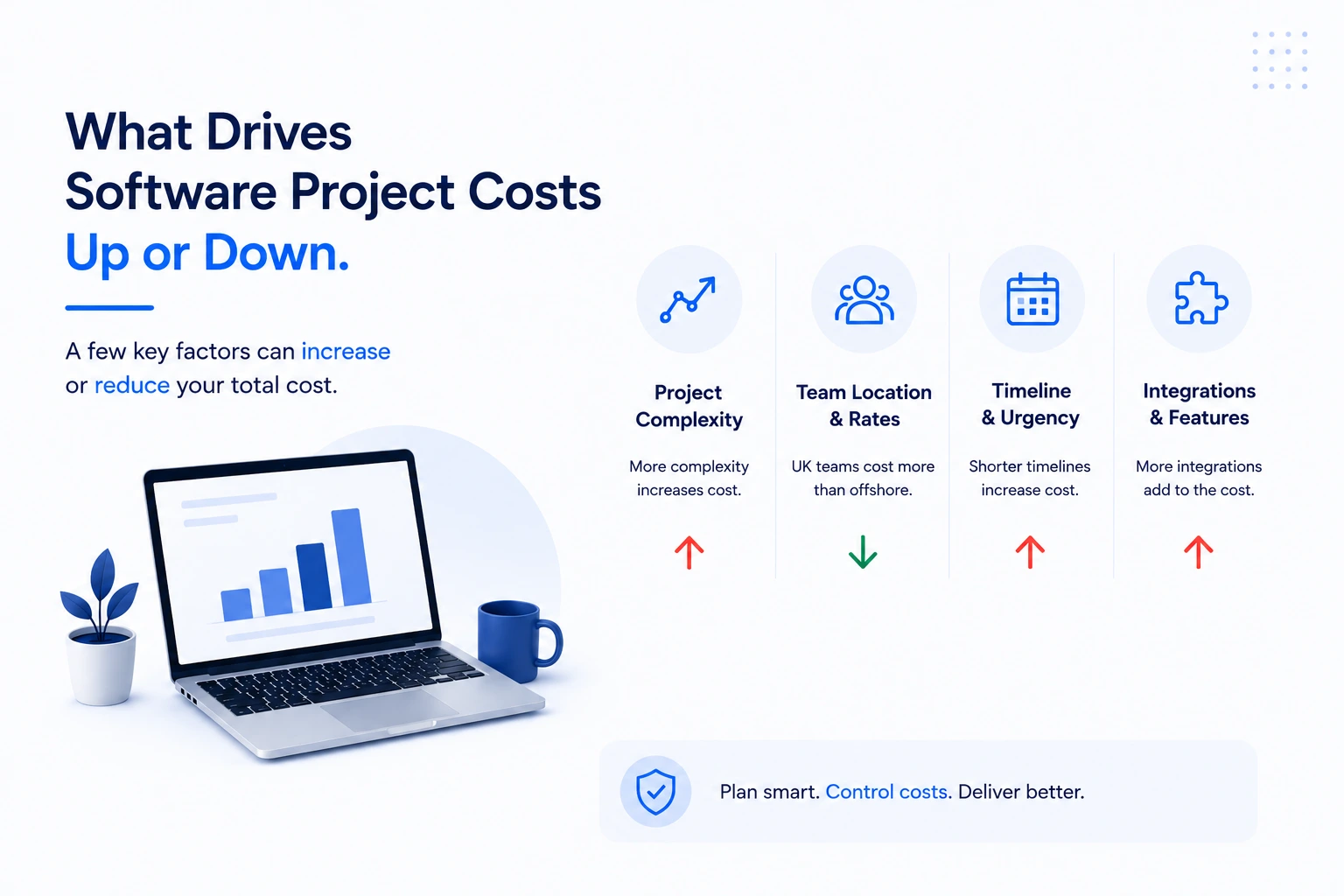
Four factors explain most of the variance between quotes for a similar sounding project.
- Scope clarity before development starts. Vague requirements are consistently the biggest cost driver in UK software projects, more than team size or technical complexity. A properly run discovery phase, typically two to three weeks, reduces total project cost by removing rework that would otherwise surface mid sprint.
- Feature complexity. Covered in detail above, this is where AI, real time data, and compliance requirements add the most to a quote.
- UX and UI design. Design typically accounts for 15 to 25 percent of total product development spend, according to UX pricing research from Parallel, and custom animations, accessibility work, and multi device layouts all draw on dedicated design time that a template cannot substitute for.
- Delivery model. Who builds it, and where, is often the single largest lever on total cost, covered in detail below.
UK Software Development Rates: Day Rate and Delivery Model Comparison
An offshore vs UK software comparison is the fastest way to see where your budget actually goes.

| Model | Typical Day Rate | Hourly Equivalent | Cost Control | Quality Risk | Best Fit |
|---|---|---|---|---|---|
| UK based | £438 to £654 | £55 to £82 | High | Low | Complex, fast changing, or regulated projects |
| Nearshore (Eastern Europe) | £400 to £600 | £50 to £75 | High | Low to medium | Most SMEs wanting quality with modest savings |
| Offshore (South Asia, Southeast Asia) | £170 to £400 | £21 to £50 | Medium | Medium to high | Stable, well specified, non urgent work |
UK day rates on marketplaces like YunoJuno averaged £438 in 2026, with the top decile of contractors billing around £654, working out to roughly £55 to £82 an hour on a standard eight hour day. Nearshore teams in Eastern Europe sit only modestly below that, which is why they tend to suit projects where quality and communication matter as much as price. A pure offshore team looks like the obvious saving, but as covered in our offshore vs UK software comparison, management overhead alone typically adds 15 to 25 percent back onto the headline offshore rate, and rework on top of that can add a further 15 to 50 percent depending on how well specified the work is, which narrows the real gap considerably. That same rework risk is why offshore carries the highest quality risk of the three models and the least predictable cost control, even though it wins cleanly on headline rate.
Bespoke App Cost UK: Why Custom Costs More Than You Expect
Bespoke app cost UK figures typically run from £40,000 to £300,000 or more, higher than standard custom development, because bespoke software is built entirely from scratch around your workflows rather than adapted from an existing product or template. Three reasons UK businesses commission it anyway:
- Process specific requirements. Your operations do not fit any existing product, and a bespoke build mirrors your workflows exactly, removing manual re-entry between systems.
- Regulatory constraints. Financial services, legal, and healthcare software often needs to meet UK specific standards that off-the-shelf tools cannot satisfy without expensive configuration.
- Long term cost efficiency. Replacing several SaaS subscriptions with one platform frequently pays back the development cost within two to three years once licensing fees are removed from the equation.
Software Development Cost by UK City
Location moves your rate more than most founders expect.
| City or Region | Typical Agency Rate | Notes |
|---|---|---|
| London | £90 to £160 per hour | Deepest specialist pool, particularly fintech, AI, and regulated sectors |
| Manchester | £65 to £125 per hour | 20 to 30 percent below London for comparable seniority, strong fintech and AI talent |
| Edinburgh, Birmingham, Bristol | £65 to £115 per hour | Similar band to Manchester, Edinburgh known for data science and AI research |
If your project does not need London specific specialism, a Manchester or Edinburgh based software development company can deliver comparable quality at a meaningfully lower rate, and the gap has narrowed further as remote and hybrid working have made location less tied to where your team physically sits.
Fixed Price vs Time and Materials: Which Pricing Model Fits
How you are billed changes your real exposure to the numbers above just as much as who builds it.
- Fixed price agrees the total cost and scope upfront, which suits an MVP or any project with a genuinely settled specification. It gives budget certainty, but any change mid project usually means a renegotiation.
- Time and materials bills for actual hours used, which suits a SaaS platform or any product where requirements will keep evolving based on user feedback. You get flexibility, but the total cost needs active tracking rather than a single number to anchor against.
- Hybrid pricing, a fixed price discovery phase followed by time and materials delivery, is increasingly the default for phased UK builds, since it prices the most uncertain part of the project, the specification, while keeping delivery flexible once real requirements are known.
Many providers now offer a software development cost calculator on their site for a rough first figure, and it is a reasonable starting point, but treat it as a ballpark rather than a quote. The real number only firms up once someone has actually scoped your specific requirements.
How to Reduce Software Development Costs Without Cutting Corners
Reducing cost does not have to mean building less. It means spending in the right order.
- Run discovery before you commit to a number. A structured two to three week discovery phase defines requirements and user journeys before a single line of code is written, and it is consistently the single highest leverage step for controlling total cost, since it removes the rework that vague scope causes later.
- Build an MVP before the full platform. An MVP typically costs 60 to 70 percent less than a full build and generates real user data that makes every subsequent decision cheaper and more accurate, rather than betting the full budget on untested assumptions.
- Choose your technology stack deliberately. Open source frameworks avoid licensing costs outright, and building with Flutter or React Native instead of separate native iOS and Android codebases typically cuts mobile development cost by 30 to 50 percent, according to multiple 2026 cross platform development benchmarks.
- Automate testing from the first sprint. Tools like Playwright and Cypress catch defects earlier and reduce the manual QA time that would otherwise be billed hour by hour later in the project, when fixes are more expensive to make.
The ROI of Custom Software Development
Custom software development cost in the UK should always be weighed against what it returns, not just what it invoices. The direct returns are usually the easiest to see: fewer licensing fees for tools you replace, faster processing, and lower error correction costs. The less visible returns often matter more over time. A well architected platform does not charge per seat the way SaaS tools do, so adding 500 users costs a fraction of what per seat licensing would, and proprietary software built around your specific processes is genuinely difficult for competitors to replicate. Most UK businesses investing £60,000 to £150,000 in bespoke software see a full payback within 18 to 36 months, with automation heavy projects often paying back faster.
Post Launch Maintenance Costs in the UK
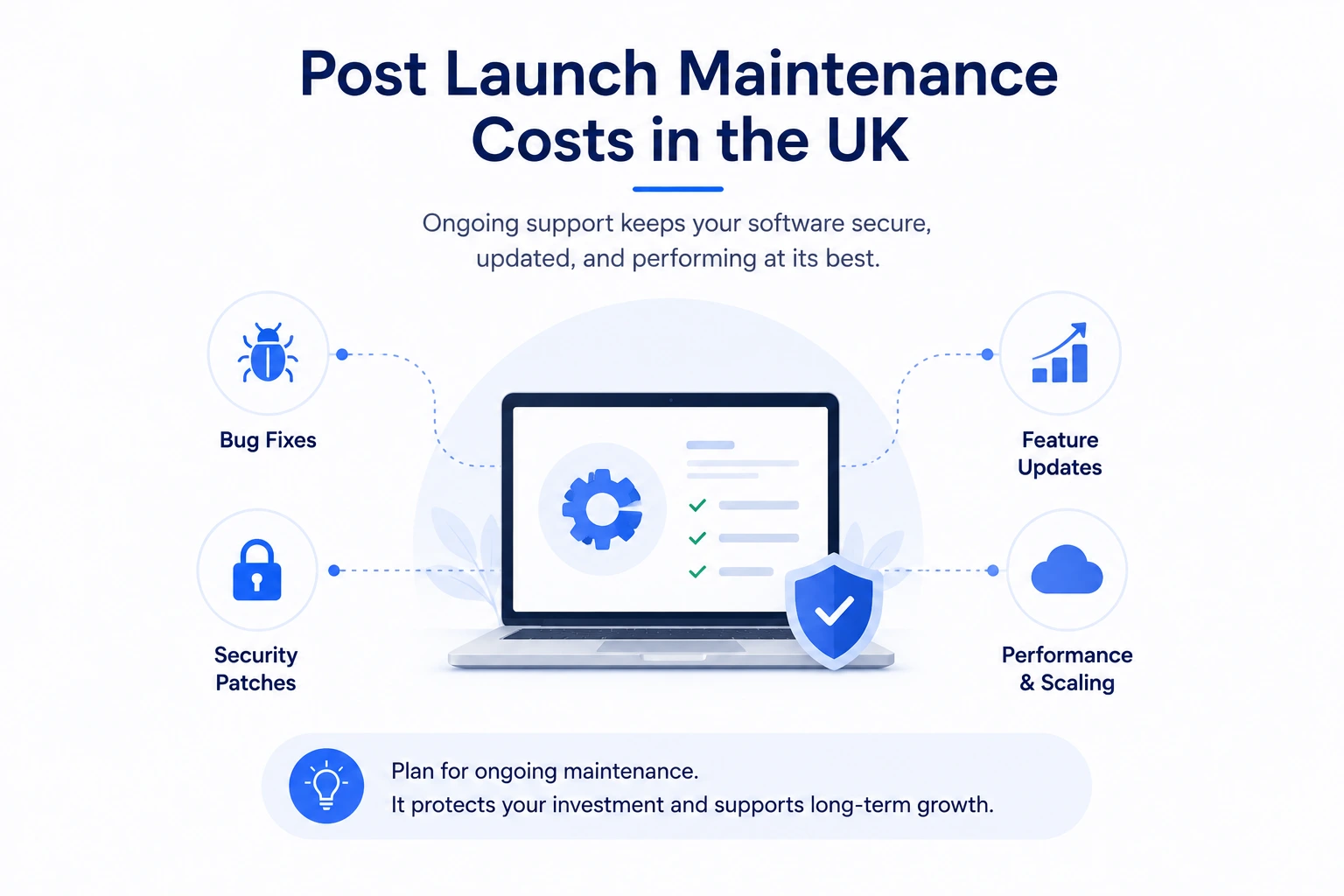
Software does not stop costing money at launch. Here is what ongoing maintenance typically looks like once a project ships, using the 15 to 20 percent annual range already covered above.
| Initial Development Cost | Annual Maintenance at 15 Percent | Annual Maintenance at 20 Percent | What It Covers |
|---|---|---|---|
| £30,000 | £4,500 | £6,000 | Bug fixes, security patches |
| £60,000 | £9,000 | £12,000 | Above, plus feature updates |
| £150,000 | £22,500 | £30,000 | Above, plus performance monitoring |
| £300,000 or more | £45,000 | £60,000 | Full support, hosting, and scaling |
The gap between the 15 percent and 20 percent figures usually comes down to how actively the software is evolving. A stable internal tool with few users sits at the lower end. A customer facing platform with a growing user base, regular feature requests, and evolving GDPR or sector specific compliance requirements sits at the higher end. Either way, this is the line item most UK businesses budget for after launch rather than before it, which turns a planned cost into an unplanned one.
Building Your Development Budget UK
A development budget UK that survives contact with a real project usually follows the same pattern. Start with a paid discovery phase rather than a free scoping call, since a properly costed roadmap makes every number after it reliable. Build an MVP before a full platform, since an MVP typically costs 60 to 70 percent less than the full build and generates real user data that makes later decisions cheaper. Budget maintenance from day one at 15 to 20 percent of build cost annually, rather than treating it as a shock after launch. And decide your delivery model based on how stable your requirements are, not on the headline day rate alone.
Choosing a Software Development Partner Within Budget
The clearest sign of a trustworthy software development company is a quote that comes after a scoping conversation, not before one. A genuine software development partner will ask about your compliance environment, your integration list, and your post launch plans before naming a number, since all three change the total materially. If you are comparing custom software development services or weighing software outsourcing UK against an in-house build, ask each partner to show the discovery process behind their number rather than just the number itself.
Need help evaluating your shortlist? Get a free 30-minute consultation with our UK-focused team.
Talk to an Expert
Conclusion
Software development cost in the UK is a genuine range, not a fixed figure, running from roughly £15,000 for a focused MVP to £500,000 or more for an enterprise platform. This bespoke software development cost breakdown exists because what decides where your project lands is rarely the technology itself. It is the quality of scoping, the delivery model you choose, and whether maintenance is planned from day one rather than discovered after launch.
Frequently Asked Questions
Typically £15,000 for a basic MVP to £500,000 or more for an enterprise platform, with most SME projects landing between £40,000 and £150,000 depending on complexity and integrations.
Bespoke software typically costs £40,000 to £300,000 or more, since it is built entirely around your specific workflows rather than adapted from an existing product.
Plan for 15 to 20 percent of your initial development cost annually. A £60,000 build typically needs £9,000 to £12,000 a year for bug fixes, security patches, and performance monitoring.
Yes, UK day rates typically run £438 to £654 versus £170 to £400 offshore. Once management overhead of 15 to 25 percent and rework of 15 to 50 percent are added back onto the offshore figure, the real gap narrows considerably from the headline rates alone.
Unclear scope before development starts. A two to three week discovery phase typically pays for itself by removing the rework that unscoped requirements cause mid project.
Yes. London agencies typically charge £90 to £160 an hour, while Manchester, Edinburgh, Birmingham, and Bristol usually run 20 to 30 percent lower for comparable seniority, without a meaningful drop in quality for most projects.
Fixed price suits an MVP or a fully scoped project where budget certainty matters most. Time and materials suit a SaaS platform or anything likely to evolve with user feedback. Most UK projects do best with a fixed price discovery phase followed by time and materials delivery.
A payment gateway integration typically adds £5,000 to £12,000. AI or machine learning features typically add £15,000 to £50,000, depending on whether the model needs custom training. A GDPR compliance layer typically adds £5,000 to £15,000.
Run a structured discovery phase first, validate with a proof of concept or MVP before a full build, choose an open source technology stack, and automate testing from the first sprint. Together these typically control cost more effectively than simply choosing the lowest day rate.

Related Articles

Custom Software Development UK: The 2026 Business Guide
Get 2026 insights on costs, compliance, timelines, and how to choose the right development partner.

Cost of Hiring Software Developers in the UK
Understand UK developer day rates, pricing models, hidden costs, and offshore savings for 2026.

Offshore vs UK Software: What to Weigh in 2026
See real 2026 day rates, hidden costs, and when nearshore or hybrid teams make more sense.
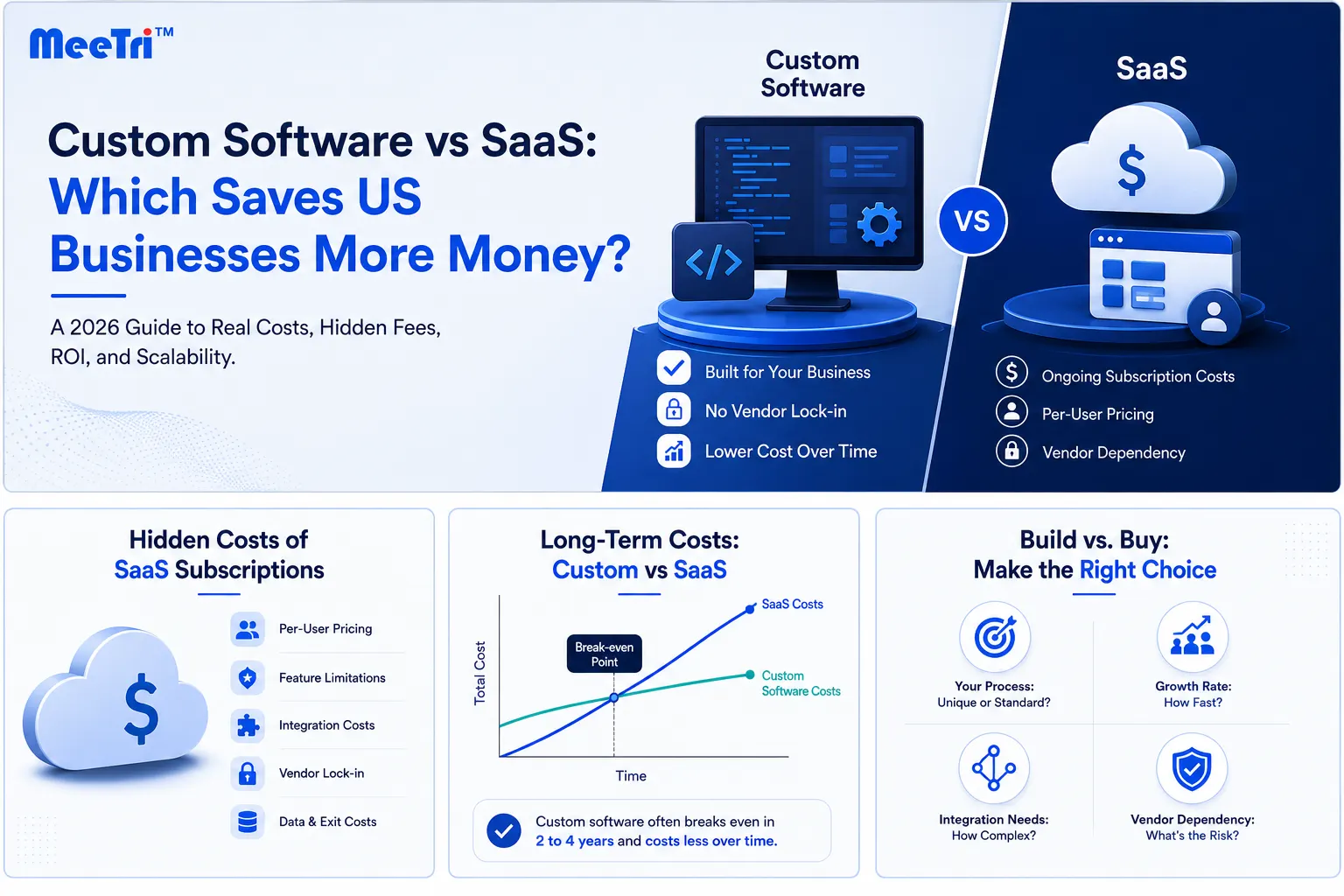
Custom Software vs SaaS: Which Saves US Businesses More Money?
Break down real costs, hidden SaaS fees, ROI, and scalability for growing businesses.